

What do you think of when you read the words, “professional development”?
Perhaps learning in a classroom, or time in front of a screen for computer-based training (CBT) comes to mind. “Professional development” is what teachers do when the kids are at home. It can be something you do when you have the time. Or something forced on you when you don’t. It could result in a badge for LinkedIn, or a line on your resume.
The question is, how much of your professional development do you remember and can you apply it?
IT teams need sharp skills and effective collaboration to respond to today’s challenges. Professional and skill development is even more important in the face of cyber incidents and disruptions. Forgotten training is wasted time. That’s why, at CWE, we believe that workshops should be memorable. They should invite you to get out of your chair, take on challenges and engage in conversations that matter to how you work – with the people who are doing it with you. Dare we say it, we believe that whenever possible, professional development should be fun.
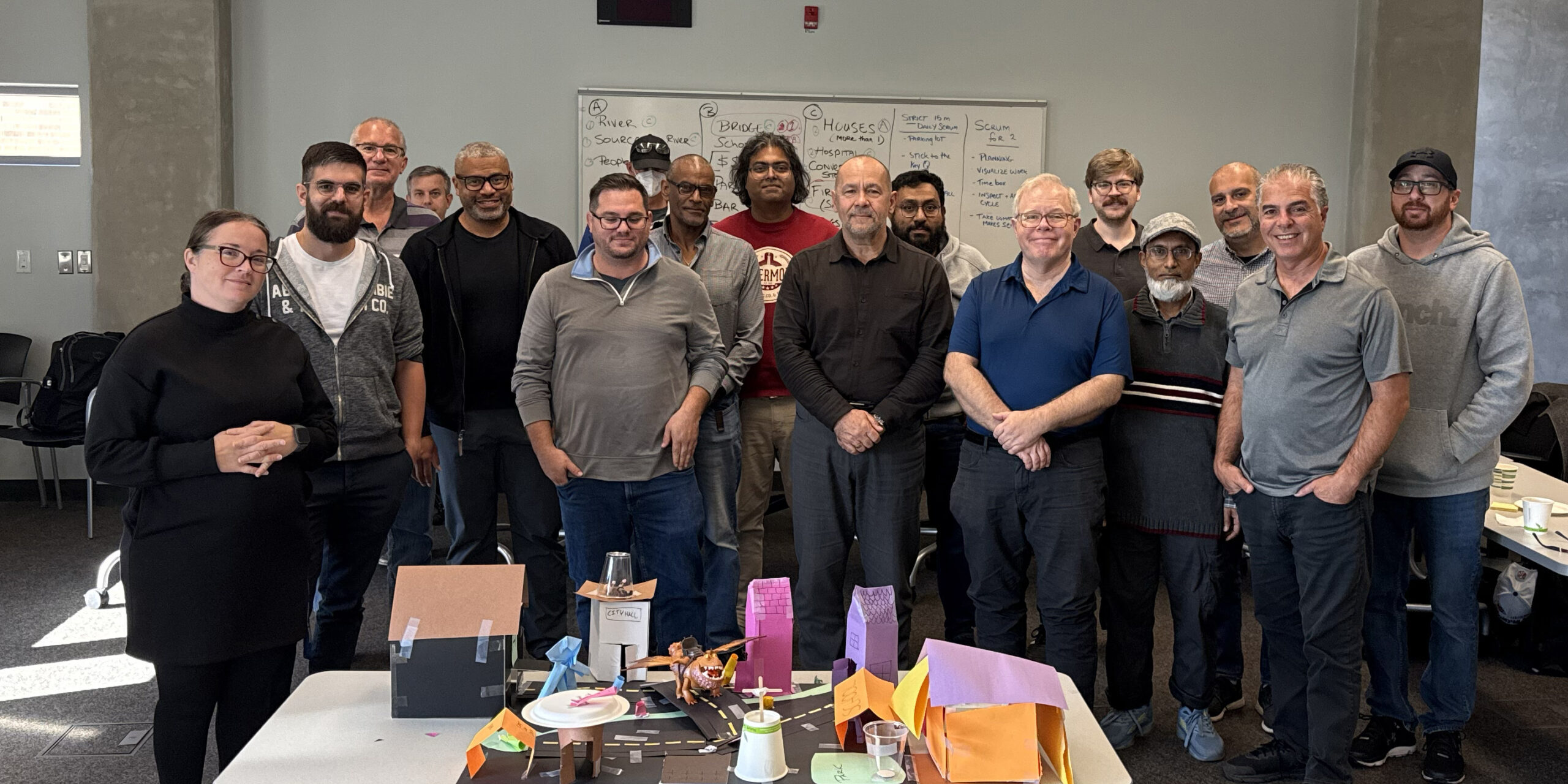
From left to right: Teams work together to collect ping pong balls, A close-up shot of a participants creation, A team discusses how to tackle a challenge
The Case for Persuasion
And we aren’t the only ones who think so.
Research suggests that experiential learning is one of the most effective approaches for adults, and unsurprisingly, surveys find that 90% of employees want training that is ‘engaging and fun’. (Please make my computer-based trainings longer and drier, said no one ever.)
If the goal of training is achieving change, then persuasion needs to be a consideration.
Most people don’t fix what they don’t see as ‘broken’. Or as Jay A. Conger wrote for HBR, the decision to make a change “essentially comes down to this: people don’t just ask What should I do? but Why should I do it?”.
In Conger’s perspective, persuasion is both a process of learning from and negotiating with others. It’s a process of presenting and inspecting the case for change.
One of the most impactful ways of presenting the evidence is by creating an environment that empowers people to discover. When people draw their own insights based on a shared experience, they stick, and it often defeats the “not invented here” syndrome that can plague “outside ideas”.
So, what does this kind of learning look like in practice?
This is where the 200 ping pong balls come in.
They were essential to a game we played that teaches the Scrum framework. At first glance, it’s deceptively simple. Pass balls. Score points. Find out who is winning at the end of every round. Take a minute to figure out how to get better. Repeat.
Beneath the playful competition, the game hides lessons in communication, iteration, and continuous improvement. Instead of an “effective communication” slide, teams figure out how to talk to each other, or they don’t. They experience ultimate victory or crushing defeat. There is equal opportunity for innovation, and, often, veiled accusations of cheating and mild gloating. At the end, participants to share their insights, ask questions and explore potential applications – how might Scrum work in our context and what could we do with it? The people in the room create the value together. Instead of being passively informed, participants draw their own conclusions and discover.
The challenge makes it fun, and the debrief conversations make it meaningful.
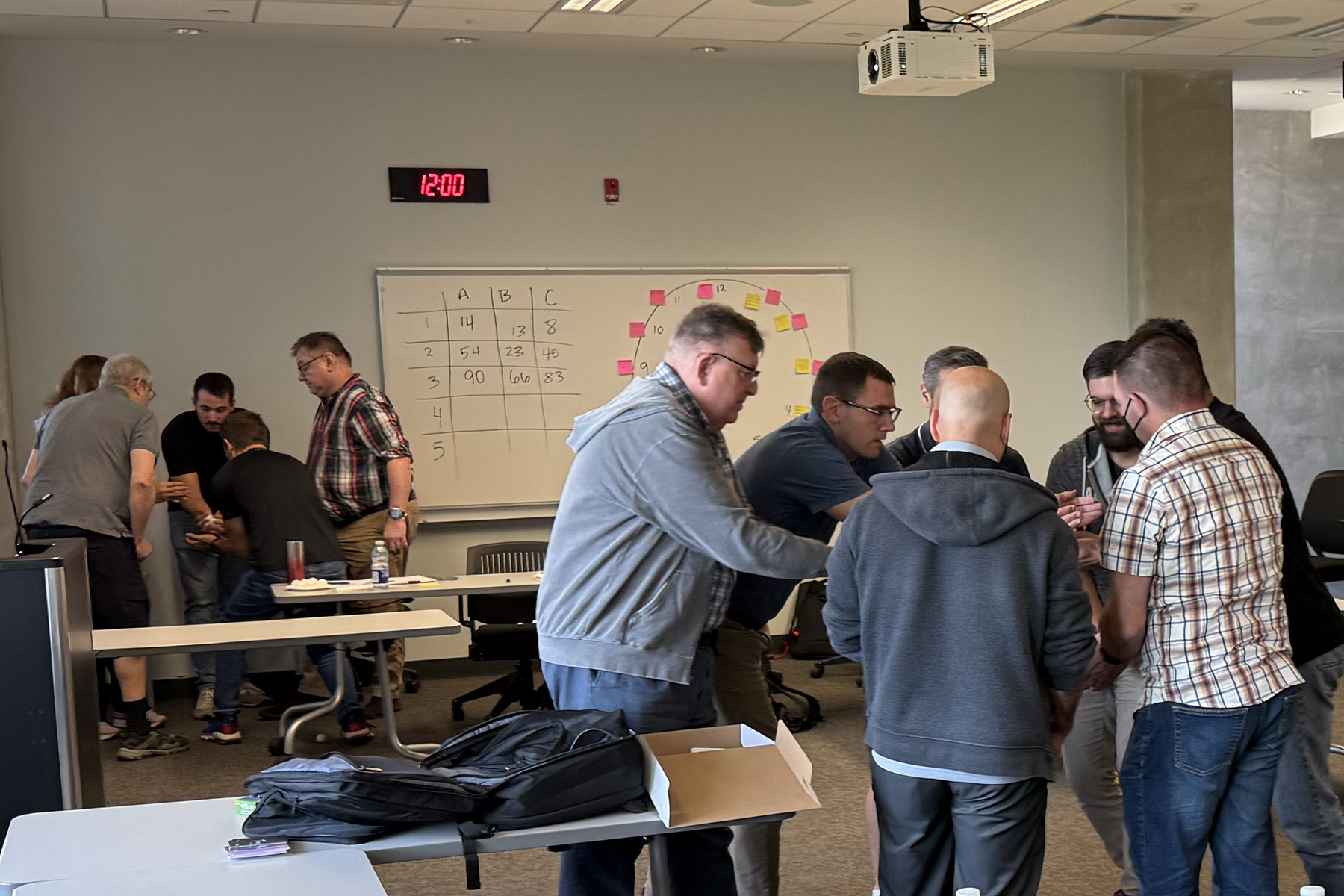
Teams focus intensely to successfully collect ping-pong balls without dropping them
Recently, one of our stakeholders shared their goal of creating a shared understanding of the Scrum framework from executives to developers. Not everyone would be using Scrum, but it was important to understand how teams were using it to communicate effectively. Here are a few of their “aha!” moments.
For the Product Owners, it came when they realized that short sprints created room to experiment. When you know you’ll get another round to try again, you can try out that “wild” idea. Even if it doesn’t work, you’ll learn something that will help you get 1% better.
For the IT teams, it was realizing that the innovation sweet spot was in what the rules didn’t dictate. Asking questions allowed them to expand the ground for negotiating the challenge and unlocked new ways of answering “how do we score more points?”
For the Executives, the turning point was a leadership test. When someone (that’d be me) tried to interrupt them in the middle of a round, telling them “I need you to do something else”, there was a startled pause and then they did exactly what great leaders do – they protected their team’s focus. They acknowledged that they were in the middle of their work and that they could address my request next round. The whole team refocused and stayed on task.
By the end of the sessions, every group had made some realizations:
- When someone dropped a ball, the teams kept going and learned. It wasn’t personal. It was just data. “Something isn’t working here.”
- Short cycles gave more chances. More chances to play led to more ideas and approaches. More approaches led to higher scores.
- The best outcomes came when teams talked more, not less – to each other and to their stakeholder.
- Understanding your team and how it works informs your strategy – do you negotiate for more resources or optimize for the abilities you have? Both strategies work.
- Asking questions unlocked options that were previously unavailable.
- Conversations surface what the teams know intuitively, connecting the dots between what worked and why.
What began with ping pong balls ended in something more meaningful: a community of people who had felt what it was like to do Scrum — who understood, through play and collaboration, what it means to inspect, adapt, and improve together.
The tools and frameworks are out there – but what transforms teams is the experience. From Scrum to strategic planning, and business continuity to tabletop exercises, we help teams move from theory to action. Contact us to explore what an in-person learning experience could look like for your organization.
Success starts with collaboration. Find out how CWE brings the region together by learning more about membership today.