

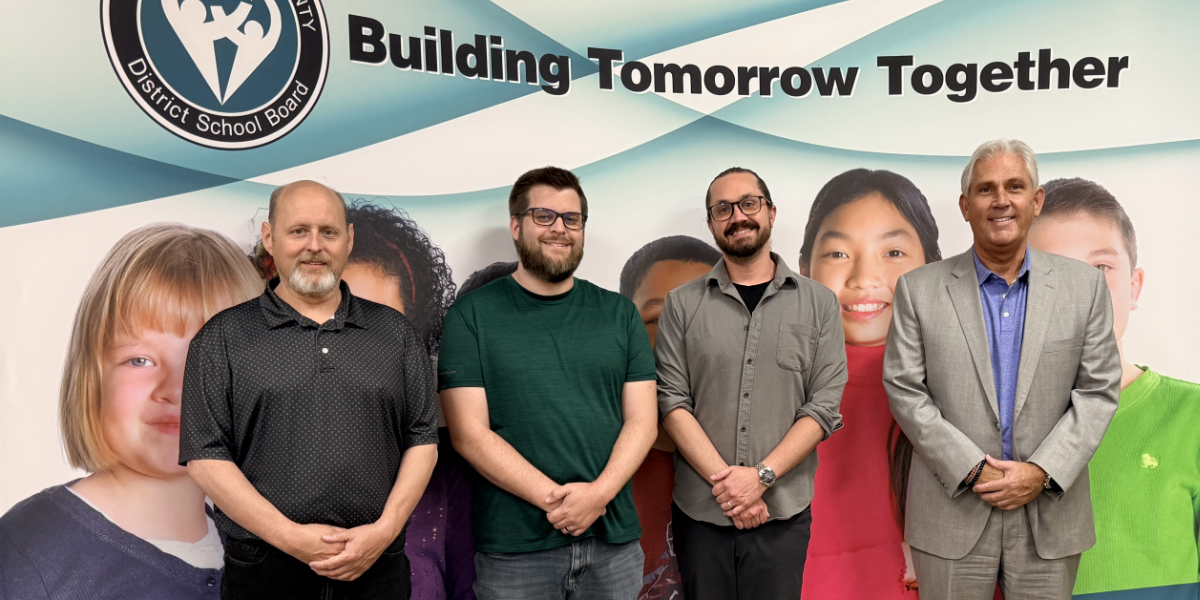
Above: Members of the IT team and Senior Leadership that supports them at The Greater Essex County District School Board.
Proactive IT teams recognize that they have a growing role to play when it comes to keeping people safe.
At the Greater Essex County District School Board (GECDSB), the IT department serves more than 40,000 students and staff across multiple locations in the city and the county. In that environment, supporting safer schools goes beyond protecting personal information. It means managing access and supporting the systems that connect people and buildings.
Keeping information safe is a big part of that.
Imagine the data contained in over 40,000 profiles. Each one has different levels of physical and digital access. Then there is the data about sites, networks, connections and hardware in each of the buildings they operate.
Knowing that the information is reliable, preserved, protected, and only accessible to the right people is essential. That has been the IT function in organizational safety – the digital part.
In the past, physical safety was more often the domain of facilities departments.
Increasingly, though, that is changing.
Technology now plays an increasing role in both data protection and physical safety. At GECDSB, one of the clearest examples of that changing responsibility came through something most organizations are familiar with: cameras.
At first glance, a camera system may sound like a facilities project. But GECDSB’s IT team quickly realized that the new cameras would have implications that would make them a better fit for IT ownership. Modern cameras are connected systems. They rely on networks. They generate and respond to data. They have access controls, retention capabilities, support needs and cybersecurity considerations. They’re not just cameras anymore.
Effective tools must be reliable, consistent and easy to manage.
Ultimately, keeping schools safe is human work. For GECDSB, updating the camera system was about making sure that an important safety tool was reliable, consistent, easier to manage and supported by the team best positioned to understand the connected systems behind it.
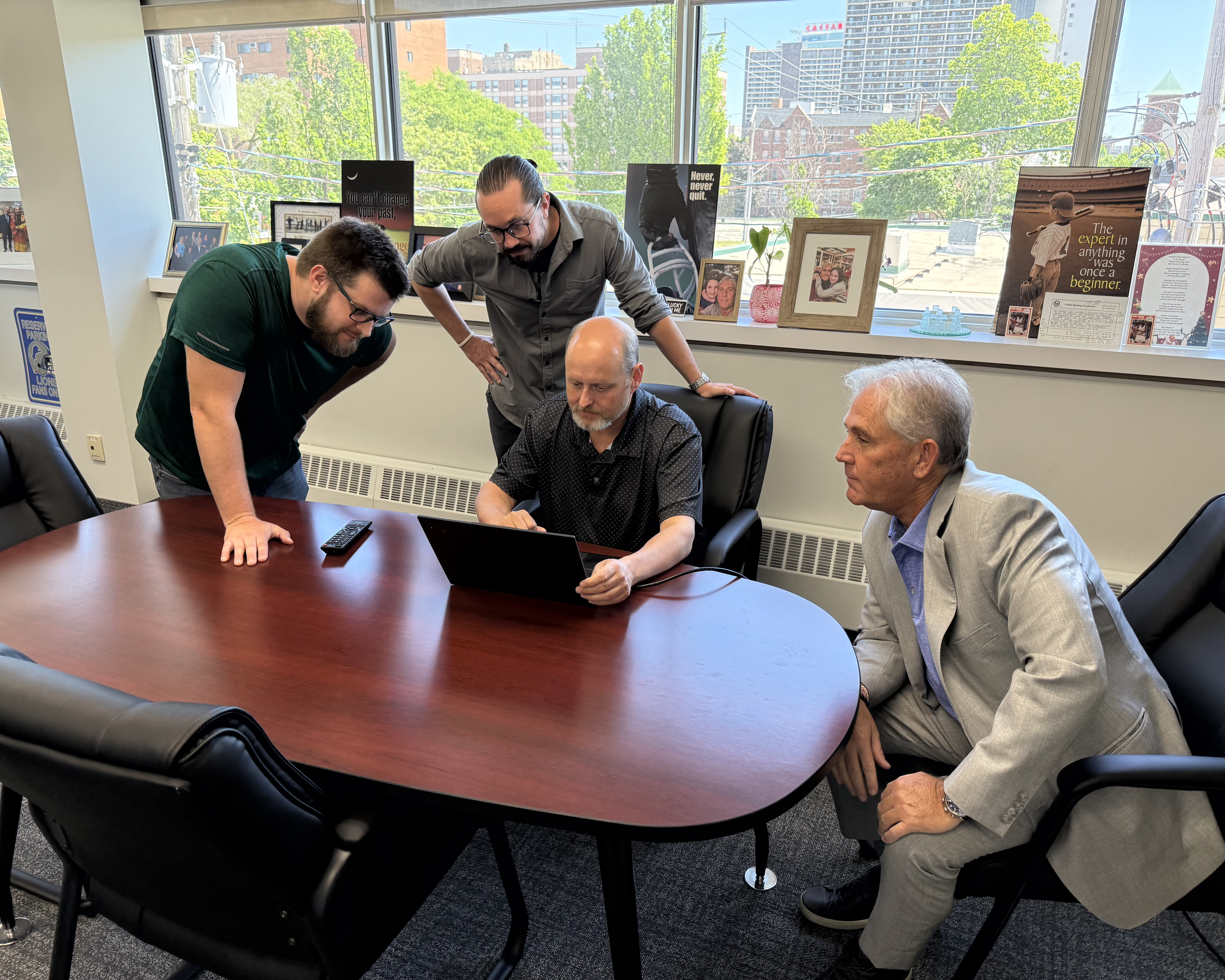
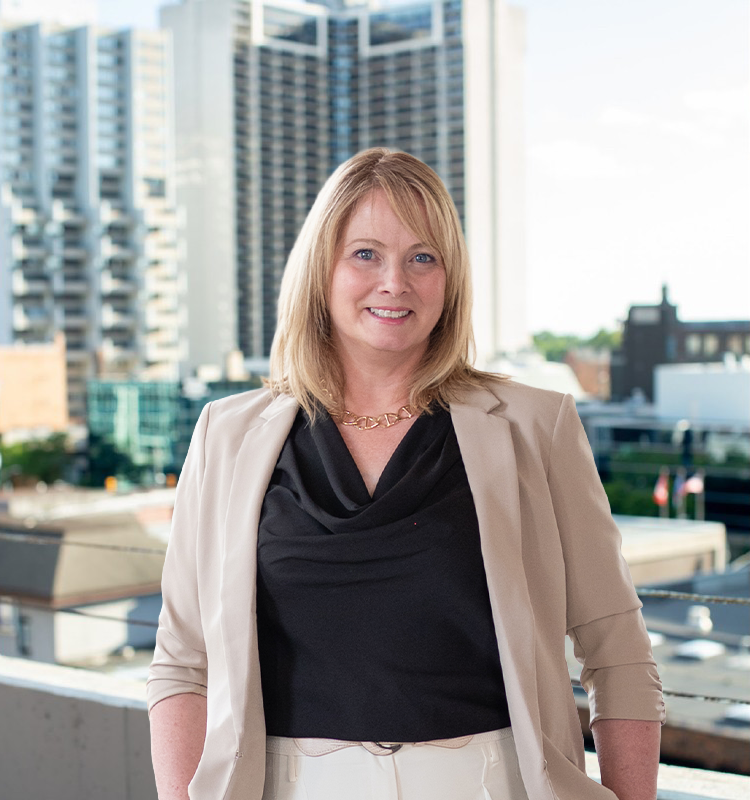
Some of the humans working to keep people safe at GECDSB: Scott Dowsett, Paul Farah, Marty Finn and Todd Awender.
When Access Needs to Keep Pace With Change
Previously, camera permissions were assigned to people and were updated manually. In a school board, staff can move between locations or take on new roles, and access needs to keep pace with those changes. A principal, for example, who moves from school A to school B should only have camera access to their current school – not old permissions that linger because a manual update hasn’t been completed yet.
With the new system, permissions are role-based. When someone’s role changes, their access changes with it.
Modern care for people needs more than a system that tracks what should be happening. We’re moving from a “to-do” list world, into “it’s done” systems and they need to be configured intelligently so that personal information is protected, and access is appropriate and timely.
A “Service First” Mindset
The first steps toward taking on the cameras started with talking to people – beginning inside IT and branching outward.
“Our motivation is customer service. How can we be the best at supporting our entire GECDSB staff? Everyone here has a specific job to do. How can we be the best at ours and improve the experience for everyone?” said Paul Farah, Manager of Information and Technology at Greater Essex County District School Board.
For example, one concern that kept surfacing was not knowing who to call for help.
“Imagine you’re a teacher. You can’t get into the building, so you call the help desk. Help desk tells you to call facilities,” Farah explained. “People calling for help and being turned away has always bothered me.”
Cyber Security Officer Scott Dowsett added, “I may not own the issue, but I’ll find out. I’m going to follow up to make sure they’re taken care of to the best of my ability.”
That mindset was an important part of the project. The team focused on improving the experience for the people relying on these systems every day.
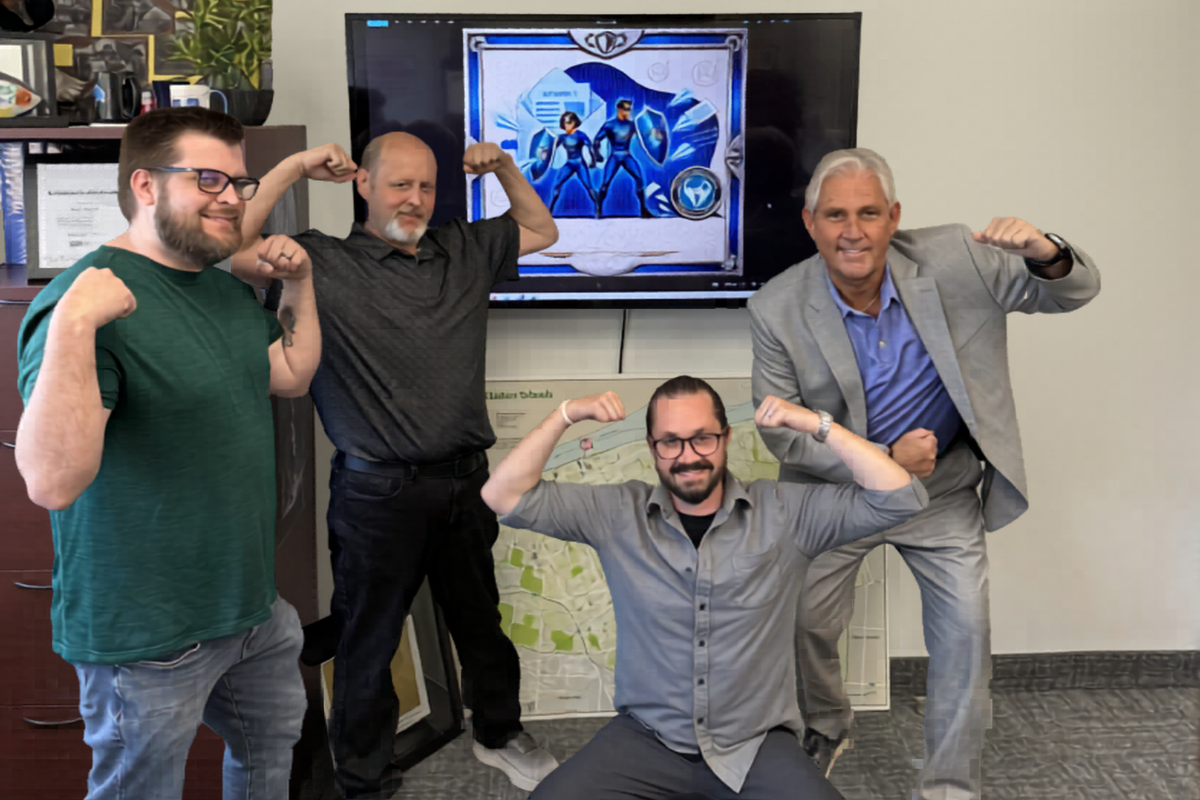
Some strong “Cyber Heroes” strike a pose. GECDSB staff who don’t fall for phishing emails during the year are recognized as “Cyber Heroes”. This initiative has been met very positively by staff. The goal is to help create a positive safety culture.
Creating the Right Approach
With that service-first focus established, they moved on to creating a deeper understanding their stakeholders needs, concerns and perspectives.
“We were aware that our approach was really important,” Farah said. “There are multiple perspectives on security, and on cameras. The stakeholders helped us see areas where people might need more context and reassurance.”
At the same time, the team approached the process of transferring responsibilities from facilities with humility.
“We didn’t want to pretend that we had all the answers. Cameras aren’t IT. This was a different beast. We had to learn everything,” Farah said.
As a result, that learning had a real impact on the how the team used their time. The project changed daily work, required new knowledge, and involved changes for processes across IT, HR, facilities and school staff.
Their combined efforts enabled the IT team to secure a system that offered major enhancements in reliability, with room to grow into the future.
The result is a system Dowsett described as “consistent,” “standardized,” and “easy to manage.”
Building Trust Through the Process
Because of their inclusive approach, the IT department was able to bring people along on a sensitive and essential upgrade.
By involving stakeholders, listening to their concerns and approaching the work with a willingness to learn, IT was able to build trust and strengthen relationships with other departments.
“We hope that we were able to use this project as an opportunity to show that although IT might not be the driver for a project, we should be a passenger.”
– Scott Dowsett
A Broader View of School Safety
More broadly, over the last 3 years, school boards have increased their focus on security “10x”.
“Security was always a priority, but it’s now a focus,” said Farah.
Left to Right: Scott Dowsett and Paul Farah with one of the new kiosks at GECDSB HQ. Laura using the kiosk when visiting.
For GECDSB, the camera system is just one example of IT supporting safer schools. The department is rolling out digital kiosks. They offer a more consistent (and legible) sign-in process than paper forms, and a higher level of reliability.
The kiosks also print visitor badges that increase awareness of guests in buildings. They also retain important contact information, such as guest phone numbers, so every person in the building can be notified in the event of an emergency.
“We have 10/40 done. The schools that have them, love them, and the ones that don’t have them yet are asking when it will be their turn,” said Dowsett.
The Door is Never Really Closed
This is where the idea of access becomes important. Just because a guest is granted access to a building doesn’t mean they should have access to all the offices.
That metaphor works in the physical world, and in the digital one.
Security today is no longer about building walls and hoping they hold. “Security is a door that is never really closed,” Farah observed. It’s about understanding who needs access, what they need access to, and when that access should evolve. In a world where technology changes daily, sometimes even hourly, keeping up with every threat, tool and vulnerability can feel impossible.
That’s why ongoing conversations matter.
Modern security depends on visibility, adaptability, and informed decision-making.
Sharing what we learn, staying curious, asking questions, and continuing to adopt better practices are what help keep people, systems, and organizations safer over time.
In the end, security is not just a technology challenge; it’s a people one. Building strong environments means helping people feel informed, empowered and connected to the role they play in protecting the organizations they’re a part of, both now and into the future.
Meaningful, stress free change starts with engaging your team in collaborative communication. Find out how CWE can facilitate the those conversations by learning more about membership today.